Their website also has a really cool guided tour aspect that brings you through it using animations of a huge mansion with many rooms
Tuesday, December 7, 2010
Strange, cool fashion I bookmarked forever ago that i would never wear
Their website also has a really cool guided tour aspect that brings you through it using animations of a huge mansion with many rooms
Monday, December 6, 2010
Sunday, December 5, 2010
I always find older versions of myself annoying when I read my old writing
"From "Dirty Jerz" with Love"
As a child I was raised in a far off and mystical land called New Jersey in a sleepy little town called Irvington (which was called “Murder City, USA” briefly in the 80’s but who’s’ counting?). My mother’s side of the family is Spanish and I spent a lot of time with my relatives in the Portuguese section of Newark (yes, that Newark and no, the Portuguese section is not that bad) eating Iberian cuisine and eventually learned to love Thai and other world gastronomy; that is, once I finally got over my 3-year old realization that “there are peanuts in my spaghetti.” The point is, that among the wonders of my much maligned homeland I treasure one food concept above all: The sacred New Jersey Breakfast. Now, until recently I didn’t know that most of this was anything but normal but it must be regional considering that it owes a lot to New York Jewish cuisine. …Except the part with the pork and the bacon.

Typically eaten on Sundays, it shares much with a typical New York breakfast enjoyed on a morning in; bagels and cream cheese, eggs or a breakfast sandwich combining a good quality round roll, friend egg, a slice of cheese and that most perfect and godly meat, Taylor Ham. Taylor Ham or Pork Roll is a delicacy that is well, barring any appetizing language, a shaped log of pork that is sliced and cooked. My favorite description I found on the web is:
“In 1910 it was described as "a food article made of pork, packed in a cylindrical cotton sack or bag in such form that it could be quickly prepared for cooking by slicing without removal from the bag.”
My, that sounds delicious. Another feature of this blessed pork product is its unique shape after cooking; 4 small slits are cut in the perimeter of the circle to keep it from curling into a giant convex UFO of pork based death.

While my attachment to these things may seem sentimental and ephemeral the beauty of the marriage of the human senses with pork, cheese, fried egg and a toasted roll is a simply transcendental treat that can be found at most diner, cafes, bagel joints and delis in the tri-state area. But it's not for anyone with a pre-existing heart condition.

Buy the Sunday paper, brew a pot of coffee and turn on CBS Sunday Morning and you have the most perfect morning at home I could imagine.
Originally posted Thursday, January 7, 2010
As a child I was raised in a far off and mystical land called New Jersey in a sleepy little town called Irvington (which was called “Murder City, USA” briefly in the 80’s but who’s’ counting?). My mother’s side of the family is Spanish and I spent a lot of time with my relatives in the Portuguese section of Newark (yes, that Newark and no, the Portuguese section is not that bad) eating Iberian cuisine and eventually learned to love Thai and other world gastronomy; that is, once I finally got over my 3-year old realization that “there are peanuts in my spaghetti.” The point is, that among the wonders of my much maligned homeland I treasure one food concept above all: The sacred New Jersey Breakfast. Now, until recently I didn’t know that most of this was anything but normal but it must be regional considering that it owes a lot to New York Jewish cuisine. …Except the part with the pork and the bacon.

Typically eaten on Sundays, it shares much with a typical New York breakfast enjoyed on a morning in; bagels and cream cheese, eggs or a breakfast sandwich combining a good quality round roll, friend egg, a slice of cheese and that most perfect and godly meat, Taylor Ham. Taylor Ham or Pork Roll is a delicacy that is well, barring any appetizing language, a shaped log of pork that is sliced and cooked. My favorite description I found on the web is:
“In 1910 it was described as "a food article made of pork, packed in a cylindrical cotton sack or bag in such form that it could be quickly prepared for cooking by slicing without removal from the bag.”
My, that sounds delicious. Another feature of this blessed pork product is its unique shape after cooking; 4 small slits are cut in the perimeter of the circle to keep it from curling into a giant convex UFO of pork based death.
While my attachment to these things may seem sentimental and ephemeral the beauty of the marriage of the human senses with pork, cheese, fried egg and a toasted roll is a simply transcendental treat that can be found at most diner, cafes, bagel joints and delis in the tri-state area. But it's not for anyone with a pre-existing heart condition.
Buy the Sunday paper, brew a pot of coffee and turn on CBS Sunday Morning and you have the most perfect morning at home I could imagine.
Originally posted Thursday, January 7, 2010
Labels:
breakfast,
memoir,
memory,
new jersey,
nostalgia,
taylor ham
More esoteric musings about design theory..
...that you can tell I was educationally obligated to produce.
When Things Are Thought Of
I begin this essay by citing a clichĂ©, an overtly obvious assertion: that things are all around us. We take this for granted everyday and it is easy to get used to the idea in a culture where whole industries are devoted to making things. We grow up wanting toys, bicycles, clothes, etc. We acquire these things by going to “thing stores,” places where rows and rows of aisles are magically stocked full of things with an unseen hand, ready for you to pick out your favorite, bring it home and give it a real context by making it part of your life. This is also not a new idea but we often fail to think of it critically; all our whole lives we deal with “Thing Theory,” with these objects being in our world and, as Heidegger would assert, making them into the “things” that surround us by giving them greater meaning and significance in our lives and thoughts. Similarly we rarely consider those who put those objects into our lives; the designers whose careful thought and planning create much of the very material world we see these days.
The designer is a sort of mysterious, ambiguous figure in modern culture. Many of us imagine them as sort of mad scientists of objects; drafting designs and prototypes in sterile, white studios; carefully scrutinizing each from behind colorful, thick-framed glasses, determining which of their children are fit for life in the outside world. This is truly a strange and disconnected way to see people who are in the profession of populating our reality with its “stuff.” That being said, more than ever designers are changing that reality, not just by designing the casing for an ipod or the look of an electric car but by taking ideas and turning them into design trends. The concept of “green living” or “going green” just sounded like terms to describe nausea before marketing and design took hold of them and helped to bring a new, young slant to the age old idea of conservation and eco-awareness. Truly, designers are probably the most qualified people to bring new concepts to the masses as they are familiar with many theories and ideas of how we relate to our surroundings by, once again, directly effecting the things we deal with in everyday life. Therefore, if done correctly, thoughtful and well conceived design really can change the course of popular culture and the way we see life as we know it.
To make for a simple example, things can be put into two categories: utilitarian and sentimental. Things can fall into either or both categories although many tend to be unable to capture both. Few people, for instance, seem to be very emotionally attached to toilets or garbage cans though I doubt you could find anyone willing to live without either of these objects in their home. Utilitarian things are just that, things that are essential to our lives or make our standard of living more convenient and comfortable. Sentimental things are conversely those things which we think of often, cherished things that hold within them, no matter how small or large, a lifetime of memories and a panorama of a specific place or time. These sentimental things live a life with the owner; by their side, comfortable, familiar. Puzzlingly, when the writer Kopytoff writes of the life of a thing in his essay “The Cultural Biography of Things: Commoditization in Progress” he tells of a thing’s life, from the moment of existence to destruction but includes neither how the object is produced nor what sentimental value it holds to a person, if at all. He also uses the obscure example of an indigenous tribe’s hut in Africa which reveals his true colors as an anthropologist but does little to contextualize the meaning of the object to the Western academic reader. He thereby misses a very important and possibly revolutionary idea: that a critical eye at the inception of a thing’s life can not only make for better and longer lasting things but can completely change the way a user relates to the object in their everyday life.
This concept, while sounding inspiringly utopian yet accessible does have one problem: it negates the concept of planned obsolescence; the very thing that has kept the capitalist system chugging along for almost 70 years in America. Cars, colors, clothes, toys; all these things are designed currently to be disposable ideas; things that fall in and out of fashion on a whim and that, most importantly, require the consumer to buy more to seem up to date or, more simply just dazzle the consumer with sleek design and fantasies of living the good life.
Calling to mind the assertion of Bill Brown in his article “Thing Theory,” the thing can also be an interruption, a dirty window, a broken drill or car, an acorn falling out of a tree and hitting you on the head as you walk past. New things have the real possibility of being just that but in a more conceptual way, an interruption to the wasteful lifestyle of throwing out old, buying new, and filling a landfill with your own personal history. Designers are beginning to look outside of corporate board rooms for directions on how they should be designing products for the public. To loosely use the concept of the “open source model,” as discussed by both Jamer Hunt in his work “A Manifesto For Post Industrial Design” and of Barry Katz in his article “The Promise of Recession,” people around the world have increasingly begun to collect and modify old, broken or outdated objects into new and different things that require them to produce none of their own “post-consumer waste,” if you will, by using someone else’s and, in essence, giving that thing a new life and biography. Designers and companies are following suit with concepts like recycled blue jeans that are blown into houses through tubes as insulation and cell phones that are specifically designed to be taken apart after being discarded. It is hoped that if this idea really takes hold it can change the course of our future as a whole; producing less waste, using less energy and creating a more comfortable world; one that for most writing about it includes even more designers to help us find creative solutions to the problems and needs in our lives.
When Things Are Thought Of
I begin this essay by citing a clichĂ©, an overtly obvious assertion: that things are all around us. We take this for granted everyday and it is easy to get used to the idea in a culture where whole industries are devoted to making things. We grow up wanting toys, bicycles, clothes, etc. We acquire these things by going to “thing stores,” places where rows and rows of aisles are magically stocked full of things with an unseen hand, ready for you to pick out your favorite, bring it home and give it a real context by making it part of your life. This is also not a new idea but we often fail to think of it critically; all our whole lives we deal with “Thing Theory,” with these objects being in our world and, as Heidegger would assert, making them into the “things” that surround us by giving them greater meaning and significance in our lives and thoughts. Similarly we rarely consider those who put those objects into our lives; the designers whose careful thought and planning create much of the very material world we see these days.
The designer is a sort of mysterious, ambiguous figure in modern culture. Many of us imagine them as sort of mad scientists of objects; drafting designs and prototypes in sterile, white studios; carefully scrutinizing each from behind colorful, thick-framed glasses, determining which of their children are fit for life in the outside world. This is truly a strange and disconnected way to see people who are in the profession of populating our reality with its “stuff.” That being said, more than ever designers are changing that reality, not just by designing the casing for an ipod or the look of an electric car but by taking ideas and turning them into design trends. The concept of “green living” or “going green” just sounded like terms to describe nausea before marketing and design took hold of them and helped to bring a new, young slant to the age old idea of conservation and eco-awareness. Truly, designers are probably the most qualified people to bring new concepts to the masses as they are familiar with many theories and ideas of how we relate to our surroundings by, once again, directly effecting the things we deal with in everyday life. Therefore, if done correctly, thoughtful and well conceived design really can change the course of popular culture and the way we see life as we know it.
To make for a simple example, things can be put into two categories: utilitarian and sentimental. Things can fall into either or both categories although many tend to be unable to capture both. Few people, for instance, seem to be very emotionally attached to toilets or garbage cans though I doubt you could find anyone willing to live without either of these objects in their home. Utilitarian things are just that, things that are essential to our lives or make our standard of living more convenient and comfortable. Sentimental things are conversely those things which we think of often, cherished things that hold within them, no matter how small or large, a lifetime of memories and a panorama of a specific place or time. These sentimental things live a life with the owner; by their side, comfortable, familiar. Puzzlingly, when the writer Kopytoff writes of the life of a thing in his essay “The Cultural Biography of Things: Commoditization in Progress” he tells of a thing’s life, from the moment of existence to destruction but includes neither how the object is produced nor what sentimental value it holds to a person, if at all. He also uses the obscure example of an indigenous tribe’s hut in Africa which reveals his true colors as an anthropologist but does little to contextualize the meaning of the object to the Western academic reader. He thereby misses a very important and possibly revolutionary idea: that a critical eye at the inception of a thing’s life can not only make for better and longer lasting things but can completely change the way a user relates to the object in their everyday life.
This concept, while sounding inspiringly utopian yet accessible does have one problem: it negates the concept of planned obsolescence; the very thing that has kept the capitalist system chugging along for almost 70 years in America. Cars, colors, clothes, toys; all these things are designed currently to be disposable ideas; things that fall in and out of fashion on a whim and that, most importantly, require the consumer to buy more to seem up to date or, more simply just dazzle the consumer with sleek design and fantasies of living the good life.
Calling to mind the assertion of Bill Brown in his article “Thing Theory,” the thing can also be an interruption, a dirty window, a broken drill or car, an acorn falling out of a tree and hitting you on the head as you walk past. New things have the real possibility of being just that but in a more conceptual way, an interruption to the wasteful lifestyle of throwing out old, buying new, and filling a landfill with your own personal history. Designers are beginning to look outside of corporate board rooms for directions on how they should be designing products for the public. To loosely use the concept of the “open source model,” as discussed by both Jamer Hunt in his work “A Manifesto For Post Industrial Design” and of Barry Katz in his article “The Promise of Recession,” people around the world have increasingly begun to collect and modify old, broken or outdated objects into new and different things that require them to produce none of their own “post-consumer waste,” if you will, by using someone else’s and, in essence, giving that thing a new life and biography. Designers and companies are following suit with concepts like recycled blue jeans that are blown into houses through tubes as insulation and cell phones that are specifically designed to be taken apart after being discarded. It is hoped that if this idea really takes hold it can change the course of our future as a whole; producing less waste, using less energy and creating a more comfortable world; one that for most writing about it includes even more designers to help us find creative solutions to the problems and needs in our lives.
Diamanda Galas
Diamanda Galas is a performer whose work divides people into two very polarized groups: those who love and respect her work and those who think she is absolutely crazy. Her career is at times overshadowed by certain pieces of her work in which she screams, cries, and imitates possession by demons all during a stage show that makes the viewer think they are surely in hell. In actuality Galas is a multitalented performer with years of experience and decades of training in the very well respected arts of jazz piano and composition and operatic singing. Despite her critics Galas has a staying power and body of work that make her sheer magnetism undeniable.
Galas was born in 1955 in San Diego California. Her family is of Greek descent and she was raised in the Greek Orthodox Church. The stirring, haunting melodies of this religious musical tradition as well as the long melismatic passages of its vocal parts influence Galas to this day. She is only able to sing this, however, due to the classical and jazz musical and vocal training she had from a young age.
Billie Holiday's original recording of "Gloomy Sunday"
Galas's live rendition
Many have said that the explorations of loss, suffering and desperation explored in her work is a direct reflection of her heritage as it seems to invoke a sort of universal “Greek soul,” the result of the Greeks being an oppressed minority in their own country for centuries at the hands of the Ottoman empire until their liberation in the 1820’s.
Example of melismatic phrasing within Greek Orthodox chanting
She also trained in the visual arts and soon began to go abroad as a young adult to engage in international productions. In 1979 she performed at the Festival D’Avignon in France as the lead in the opera "Un Jour comme un autre", or “A Day Like Any Other” by composer Vinko Globokar. The work was based upon Amnesty International's documentation of the arrest and torture of a Turkish woman for alleged treason.
Galas has cultivated a look and style on stage that further separates her from any other performer, especially female performers. She has typically Greek dark features, long black hair, a striking brow and piercing eyes. She accentuates this by wearing dark eyeliner and eye makeup, dramatic clothing often black clothing that adds a romantic yet unnerving ambience to her presence and makeup that accents the strong bone structure she possesses. This, in short makes her appearance as arresting and pointed as her work. It also gives her a ghostly and demonic look that gives what many call a “goth” ambience to her emotionally stunning performances. She often appears to be both bewitching and a literal witch, which she strangely enough provided a voice for in 1982’s Conan the Barbarian movie.
In the mid ‘80’s Galas was performing in various productions, many of which she created herself. Slowly word began growing of person after person contracting something called AIDS, and gradually many in artistic circles and middle-America knew someone who was suffering from the new disease. Government remained largely silent about the crisis for years; little funding was given to medical research fro study and the search for a cure and the popular consensus was that this problem was almost a moral disease- something that was only spread by the gay and promiscuous. It was even dubbed “the gay cancer” by some. Outraged at the shame that silenced so many and the voiceless status of people all around becoming sicker many artists and everyday citizens took to the streets in protests and walks that had one goal: raising awareness about the severity and the scale of the disease. They knew that once the public saw how badly the disease ravaged its victims it would be much easier to get support for research and medicine. Many artists started creating new works based on their experiences with the epidemic, some of whom had contracted AIDS and others who saw the disease take the spirit out of their closest friends.
Galas’s contribution to this grass-roots movement was a work called Plague Mass, a full length piece in which she embodied all sides of the AIDS debate. She cried and yelled, sang operatically and recited bible passages about sin and evil all while imitating glossolalia, or speaking in tongues. She embodied sinner and saint as she took the viewer on a journey through the pain and emotion experienced by those with a personal connection to the disease and also channeled the rage and primal crying scream of everyone who knew that their outrage and concern for those suffering was going unheard by those in power. Many believed that the lack of support by the mainstream media for AIDS awareness was a result of the idea that gay people were morally corrupt and somehow disserved the sickness as punishment. Her use of passages from the bible was also a reference to her disdain at the condemnation of homosexuals by the Roman Catholic Church and the lack of simple empathy and understanding that should have outpoured from the supposedly tolerant and loving church for an oppressed sick minority. Galas also performed the piece, either ironically or fittingly in the Cathedral of Saint John the Divine in New York. She adapted a pervious work to create plague mass after she learned that her brother had contracted the disease, which he eventually died from. She also had the phrase “we are all HIV+” tattooed on her knuckles.
Plague Mass is undeniably the work that Galas is most famous for yet she also received the most criticism for it. Some complain that the work is simply frightening and incomprehensible unless you know the source for her emotional outbursts in the piece. Others lambaste her for performing the piece in private shows and for an audience that arguably had to like her and was probably already aware of the AIDS crisis.
Excerpts from "From Eyes Without Blood" from Plague Mass
Saint Of The Pit
Much of her work has actually been musical in nature as she has composed her own jazz and rock pieces as well as putting her unique touch on classical American country tunes and the work of Ella Fitzgerald. In 1994 she recorded The Sporting Life, a full length rock album in collaboration with Led Zeppelin bassist John Paul Jones, who had admired her work for years. It is arguably the most mainstream and visible work done by Galas as following its release she and Jones embarked on a typical press junket and performance schedule to publicize the album. In her explorations of different media and genres Galas has demonstrated the personification of America and what it is to be an American; she has spent years learning and training in classical forms and respecting preexisting forms of music only to use all of this knowledge to selectively appropriate works she loves and put her own very unique voice to it.
Diamanda Galas is a world class talent and fearless woman who has never been afraid not only to be herself but to present her work honestly and without the worry of appearing beautiful or attractive to secure an audience. Through her stage work, her music and her outspoken activism viewers not only get entertainment with a message but a female performer who is 100% original and takes no prisoners.
WORKS CITED
http://www.diamandagalas.com/
http://www.amazings.com/articles/article0022.html
http://sonic.net/~goblin/9galas.html
http://somewhere.org/NAR/work_excerpts/galas/main.htm
http://newmusicbox.org/article.nmbx?id=2311
http://www.diamandagalas.com/press/live/serpenta/theobserver_0901.htm
Remember that time I was terrified to read at Feminist Open Mic Night?
I had these folded up in my pocket and announced to the audience that they should please wait to stone me until after I had read both pieces. Where do I even come up with these self-immolating declarations?
1.
You seem so practiced at this
And I know you won’t regret me
But baby, respect me
Such smooth words, a quick tongue
But a cold body, hard heart
Incapable of a passionate embrace or the warm intertwining of fingers I offer you,
I clasp your hands in mine but your fingers are stiff, unmovable
Mechanically incapable of the subtle and quiet affection I dole out ceaselessly.
How did you even come to meet me?
Oh, now I recall
Furtive glances cast across a dance floor
Stolen peeks from across the way
“You’re sexy,” you tell me, so much later
“When will you shake your ass again for me?”
But there’s been a misunderstanding
Those moves, those motions and convulsions
Were not meant for yours or any other male eyes
But were an expulsion of the joy and life and passion
From my soul for me and ONLY for me
Don’t misunderstand, I know you never lied
But I’ve had boys and I need a man
Someone who will try
One who is unafraid to admit he needs me
With love and devotion that flows so easily
From a well of self-knowledge and respect
Not to be mean to me,
Not to make a queen of me
But to treat me EQUALLY
If you don’t have the time for me then treat me kindly
Don’t call me over in the middle of the night
Only to give me the cold shoulder come day light
Just a few more words and then I’ll be done
I was looking for understanding
Not “for fun”
Yes, I need labels,
I like to know where I stand
But don’t tell me what you can’t do,
Tell me what you can
So save your cheap fine flattery
I choose to live my life passionately
And after every time I see you it becomes clearer to me
Is it really worth it?
Nah, I don’t think he’s for me.
2.
20 years after Ms. Magazine
My mother teaches me about solidarity AND independence
I learn “We Shall Overcome” AND “I am Woman, Hear Me Roar”
She does not shelter me and tells me
This country of ours has had many wars but we still fight for equality
At 8 years old I count MLK and Elizabeth Cady Stanton as role models
By 11 I’m sure I can call myself a feminist and yet
It’s not too cool to be obsessed with civil rights
Called “commie” by the class and ugly so many times by the boys
Who secretly feared my intelligence and headstrong will
But they don’t know that I come from short, strong Spanish fisherwomen
Who run the whole village while the men are at sea
Or grandmothers who survived the depression and still refuse to live wastefully
So I’ve had to learn not to argue but debate gracefully
Not to scream and cry as when I was younger and peers verbally smacked me
Whatever respect they lack for me
I’ve come to handle it tactfully
I’m still recovering from the insults they hurled at me many years ago
Still reconciling the idealistic girl who thought she’d be leading a revolution by now
with the me who can’t muster the courage to walk up to a stranger and start a conversation
But every time I take a step forward,
Every time I push and ignore the boom pound of fear inside of me
Every time I refuse to shut up when I have something to say
I have to count my blessings
For those who came before
Who were beaten, killed and raped for nothing more
And remember that this too is why we must fight
So that in the future leaders and thinkers who speak
Are not stolen into the night
Men and women become “desaparecidos”
Their messages forgotten
Remembered only as ghosts
In pictures held in rallies in lands below the border
Victims of tactics more destructive than bombs and mortars
So at your own discretion let these people’s actions be a lesson
Threatened by their governments, lives in danger
They take to the streets and march alongside strangers
They will be the change that needs to be made
And refuse to wait to be saved
But their ranks are not only in Caracas, Cordoba and Sao Paulo
They march in D.C., Chicago and Indianapolis, too
So next time you hear about a rally
And you’re sitting on your couch dreaming about January, 20, 2008
Remember all the people who have lived and died for the right to assemble and take to the streets
That’s what they would want for me and you
1.
You seem so practiced at this
And I know you won’t regret me
But baby, respect me
Such smooth words, a quick tongue
But a cold body, hard heart
Incapable of a passionate embrace or the warm intertwining of fingers I offer you,
I clasp your hands in mine but your fingers are stiff, unmovable
Mechanically incapable of the subtle and quiet affection I dole out ceaselessly.
How did you even come to meet me?
Oh, now I recall
Furtive glances cast across a dance floor
Stolen peeks from across the way
“You’re sexy,” you tell me, so much later
“When will you shake your ass again for me?”
But there’s been a misunderstanding
Those moves, those motions and convulsions
Were not meant for yours or any other male eyes
But were an expulsion of the joy and life and passion
From my soul for me and ONLY for me
Don’t misunderstand, I know you never lied
But I’ve had boys and I need a man
Someone who will try
One who is unafraid to admit he needs me
With love and devotion that flows so easily
From a well of self-knowledge and respect
Not to be mean to me,
Not to make a queen of me
But to treat me EQUALLY
If you don’t have the time for me then treat me kindly
Don’t call me over in the middle of the night
Only to give me the cold shoulder come day light
Just a few more words and then I’ll be done
I was looking for understanding
Not “for fun”
Yes, I need labels,
I like to know where I stand
But don’t tell me what you can’t do,
Tell me what you can
So save your cheap fine flattery
I choose to live my life passionately
And after every time I see you it becomes clearer to me
Is it really worth it?
Nah, I don’t think he’s for me.
2.
20 years after Ms. Magazine
My mother teaches me about solidarity AND independence
I learn “We Shall Overcome” AND “I am Woman, Hear Me Roar”
She does not shelter me and tells me
This country of ours has had many wars but we still fight for equality
At 8 years old I count MLK and Elizabeth Cady Stanton as role models
By 11 I’m sure I can call myself a feminist and yet
It’s not too cool to be obsessed with civil rights
Called “commie” by the class and ugly so many times by the boys
Who secretly feared my intelligence and headstrong will
But they don’t know that I come from short, strong Spanish fisherwomen
Who run the whole village while the men are at sea
Or grandmothers who survived the depression and still refuse to live wastefully
So I’ve had to learn not to argue but debate gracefully
Not to scream and cry as when I was younger and peers verbally smacked me
Whatever respect they lack for me
I’ve come to handle it tactfully
I’m still recovering from the insults they hurled at me many years ago
Still reconciling the idealistic girl who thought she’d be leading a revolution by now
with the me who can’t muster the courage to walk up to a stranger and start a conversation
But every time I take a step forward,
Every time I push and ignore the boom pound of fear inside of me
Every time I refuse to shut up when I have something to say
I have to count my blessings
For those who came before
Who were beaten, killed and raped for nothing more
And remember that this too is why we must fight
So that in the future leaders and thinkers who speak
Are not stolen into the night
Men and women become “desaparecidos”
Their messages forgotten
Remembered only as ghosts
In pictures held in rallies in lands below the border
Victims of tactics more destructive than bombs and mortars
So at your own discretion let these people’s actions be a lesson
Threatened by their governments, lives in danger
They take to the streets and march alongside strangers
They will be the change that needs to be made
And refuse to wait to be saved
But their ranks are not only in Caracas, Cordoba and Sao Paulo
They march in D.C., Chicago and Indianapolis, too
So next time you hear about a rally
And you’re sitting on your couch dreaming about January, 20, 2008
Remember all the people who have lived and died for the right to assemble and take to the streets
That’s what they would want for me and you
Found
Saturday, December 4, 2010
What I do when I'm stuck alone
"Reaching out into the abyss...and into the loving arms of Brits"
There was a time in my life when I was mired in the vast and wasting expanse of a concept called high school, trapped by my rural surroundings and complete lack of a nearby municipal infrastructure. To put it lightly, it was complete hell. I survived this period in my life only through a combination of interests and media that had nothing to do with my immediate environment, namely esoteric foreign music, a subscription to Netflix and a slight obsession with British television.
As time passed I finally escaped that tax funded hellhole, went to college, and was much happier. Still, as a freshman in college who didn’t own a TV sometimes I craved the mind numbing comfort of the boob tube in a way I can’t express to you. Maybe it was because at this time the whole network TV online thing hadn’t caught on in the US, maybe I missed those same old shows that I found comfort in before, maybe I identify with the British soul. Or maybe I was just weird. At any rate (to paraphrase my mother), I was back on the hook of British “tele” in no time with the help of YouTube. I’d like to spread the addiction to you, the viewer. A quick viewing of any of these shows and you’ll see that although separated by an ocean there’s not an insurmountable pop cultural difference between the two countries. Ok, I say that because most of my favorite shows are either trivia based of feature witty banter and references wherein it is necessary to have knowledge of these things. Oh, how post-modern of me. For everything else you can use google, just like I do every other time the internet brings me something I’m not cool enough to know. Without further ado, awaaaaaaaaaaay we go!
Dr. Who
Television’s longest running show ever and the most successful sci-fi show of all time. It has gone through many incarnations and 11 “Doctors” to date but the plot synopsis is as follows:
The character of the Doctor was initially shrouded in mystery. All that was known about him in the programme's early days was that he was an eccentric alien traveler of great intelligence who battled injustice while exploring time and space in an unreliable old time machine called the TARDIS, an acronym for Time And Relative Dimension(s) In Space. As it appears much larger on the inside than on the outside, the TARDIS has been described by the Third Doctor as "dimensionally transcendental"[40] and, because of a malfunction of its Chameleon Circuit, is stuck in the shape of a 1950s-style British police box.
As a Time Lord, the Doctor has the ability to regenerate his body when near death. Introduced into the storyline as a way of continuing the series when the writers were faced with the departure of lead actor William Hartnell in 1966, it has continued to be a major element of the series, allowing for the recasting of the lead actor when the need arises. The serial The Deadly Assassin established that a Time Lord can regenerate twelve times, for a total of thirteen incarnations. To date, the Doctor has gone through this process and its resulting after-effects on ten occasions, with each of his incarnations having his own quirks and abilities but otherwise sharing the memories and experience of the previous incarnations
Yeah, I wiki’d it. Sue me; it’s been on for 40 years, that’s a bit long to write a blurb about.
The Doctor reunites with an old travel companion:
The Doctore causes the eruption of Mt. Vesuvius!
Never Mind the Buzzcocks
A long running comedy “quiz show” that focuses on music and is notable for its camp and insulting jokes. Though it has had several hosts in its history Never Mind the Buzzcocks is unique in the pure joy each host takes in expressing their disgust with vapid pop music and not even the guests invited onto the show are spared the vitriol as each one is routinely plumbed for laughs.
The evil genius of Josh Groban:
Infamous walk-off of panel guest Preston:
Sunday Night Project
Like SNL. Except silly. And good. This weekly sketch comedy/chat show is hosted by comedians Alan Carr and Justin Lee Collins is helmed by a different celebrity every episode. Hilarity ensues along with mock news segments, cross dressing and music performances.
UK's Channel 4 doesn't want me embedding this so here are the links:
Electro-shock quiz time with Martin Sheen
Big Fat Quiz of the Year
An annual rehash of the year’s events both political and pop in the form of a quiz show with some of Britain’s favorite personalities. My personal favorite is a round where panelists have to guess which news stories are being acted out as plays by elementary school children.
Mitchell Brook Primary presents the Da Vinci Code plagiarism scandal:
The Mighty Boosh
A surreal, comical, whimsical adventure sitcom which follows the tragically un-hip, jazz loving Howard Moon and ultra cool Vince Noir and friends on kooky flights of fancy in pursuit of their dream of musical success. I became hooked on it as a freshman and it’s now syndicated to Adult Swim in the U.S.
Originally posted Wednesday, January 6, 2010
There was a time in my life when I was mired in the vast and wasting expanse of a concept called high school, trapped by my rural surroundings and complete lack of a nearby municipal infrastructure. To put it lightly, it was complete hell. I survived this period in my life only through a combination of interests and media that had nothing to do with my immediate environment, namely esoteric foreign music, a subscription to Netflix and a slight obsession with British television.
As time passed I finally escaped that tax funded hellhole, went to college, and was much happier. Still, as a freshman in college who didn’t own a TV sometimes I craved the mind numbing comfort of the boob tube in a way I can’t express to you. Maybe it was because at this time the whole network TV online thing hadn’t caught on in the US, maybe I missed those same old shows that I found comfort in before, maybe I identify with the British soul. Or maybe I was just weird. At any rate (to paraphrase my mother), I was back on the hook of British “tele” in no time with the help of YouTube. I’d like to spread the addiction to you, the viewer. A quick viewing of any of these shows and you’ll see that although separated by an ocean there’s not an insurmountable pop cultural difference between the two countries. Ok, I say that because most of my favorite shows are either trivia based of feature witty banter and references wherein it is necessary to have knowledge of these things. Oh, how post-modern of me. For everything else you can use google, just like I do every other time the internet brings me something I’m not cool enough to know. Without further ado, awaaaaaaaaaaay we go!
Dr. Who
Television’s longest running show ever and the most successful sci-fi show of all time. It has gone through many incarnations and 11 “Doctors” to date but the plot synopsis is as follows:
The character of the Doctor was initially shrouded in mystery. All that was known about him in the programme's early days was that he was an eccentric alien traveler of great intelligence who battled injustice while exploring time and space in an unreliable old time machine called the TARDIS, an acronym for Time And Relative Dimension(s) In Space. As it appears much larger on the inside than on the outside, the TARDIS has been described by the Third Doctor as "dimensionally transcendental"[40] and, because of a malfunction of its Chameleon Circuit, is stuck in the shape of a 1950s-style British police box.
As a Time Lord, the Doctor has the ability to regenerate his body when near death. Introduced into the storyline as a way of continuing the series when the writers were faced with the departure of lead actor William Hartnell in 1966, it has continued to be a major element of the series, allowing for the recasting of the lead actor when the need arises. The serial The Deadly Assassin established that a Time Lord can regenerate twelve times, for a total of thirteen incarnations. To date, the Doctor has gone through this process and its resulting after-effects on ten occasions, with each of his incarnations having his own quirks and abilities but otherwise sharing the memories and experience of the previous incarnations
Yeah, I wiki’d it. Sue me; it’s been on for 40 years, that’s a bit long to write a blurb about.
The Doctor reunites with an old travel companion:
The Doctore causes the eruption of Mt. Vesuvius!
Never Mind the Buzzcocks
A long running comedy “quiz show” that focuses on music and is notable for its camp and insulting jokes. Though it has had several hosts in its history Never Mind the Buzzcocks is unique in the pure joy each host takes in expressing their disgust with vapid pop music and not even the guests invited onto the show are spared the vitriol as each one is routinely plumbed for laughs.
The evil genius of Josh Groban:
Infamous walk-off of panel guest Preston:
Sunday Night Project
Like SNL. Except silly. And good. This weekly sketch comedy/chat show is hosted by comedians Alan Carr and Justin Lee Collins is helmed by a different celebrity every episode. Hilarity ensues along with mock news segments, cross dressing and music performances.
UK's Channel 4 doesn't want me embedding this so here are the links:
The Sunday Night Project | Lily Allen's News
Electro-shock quiz time with Martin Sheen
Big Fat Quiz of the Year
An annual rehash of the year’s events both political and pop in the form of a quiz show with some of Britain’s favorite personalities. My personal favorite is a round where panelists have to guess which news stories are being acted out as plays by elementary school children.
Mitchell Brook Primary presents the Da Vinci Code plagiarism scandal:
The Mighty Boosh
A surreal, comical, whimsical adventure sitcom which follows the tragically un-hip, jazz loving Howard Moon and ultra cool Vince Noir and friends on kooky flights of fancy in pursuit of their dream of musical success. I became hooked on it as a freshman and it’s now syndicated to Adult Swim in the U.S.
Originally posted Wednesday, January 6, 2010
I've forgotten more than I'll ever know
I was able to take a few amazing classes while I was in school and the baffling thing is I can barely remember a thing from college at all, never mind esoteric theories of modern design. Apparently this is my final for such a class through the written voice of a major player in design history...who I remember nothing about.
History of Design
Final Paper
The Model as Muse at the Metropolitan Museum of Art
As seen through the eyes of Thorstein Veblen
In a time when wastefulness is at an all time high, a time when men, women and even children live on the ever-moving conveyor belt of of consumption the Metropolitan Museum of Art has decided to exhibit a show celebrating the worship of retail culture. While “the Model as Muse,” as the exhibit is titled focuses on the rise to prominence of those wearing the garments one cannot help but to mention that their entire profession serves solely to promote the capitalistic gains of the design house.
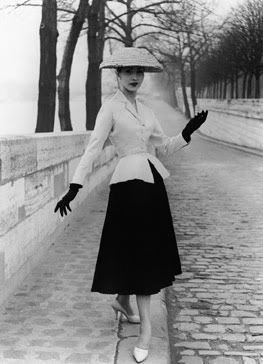
The show begins in 1947, a crossroads for history and fashion in many respects. One, the Post-WWII yearnings of consumers, especially those living in America, made them hungry for a new ostentatious style after the trauma and rationing that accompanied the war. Two, Christian Dior debuted “the New Look,” an ultra-feminine mode of dress designed to exaggerate hips and bust while cinching in the waist but always emphasizing the lady as demure and refined.
Dior’s New Look circa 1951
Three, the Ford modeling Agency, now one of the foremost businesses of its kind, opened its doors.
Almost immediately one can see the idea of “hemline economics” at play in this chronological show. While some swear it is an actual market barometer rather than a coincidence or after effect, it has been noted that within the last century the length of skirt hemlines has often reflected not just the cultural climate of an era but also the severity of the economic forecast. This is reflected in flapper fashion of the 20’s to the more austere slim, straight silhouette of the 30’s. Similarly, the New Look amplifies the female form and brought the skirt up slightly, optimistically after WWII and was immediately followed by the mini skirt craze of the free-wheeling and design conscious 60’s, which is shown in the exhibition in works designed by Paco Rabanne, Yves Saint Laurent and others.
Donyale Luna in Paco Rabbane photo by Richard Avedon

Twiggy in Yves Saint Laurent dress 1967
The idea of fashion is rooted therefore not in the spirit of creativity, change of joie de vivre but truly in the lifestyle of happiness sought through planned obsolescence, the very vehicle through which countries have been padding their economies for decades. Hemlines, shoulder pads, ribbons, bows, and buttons all are ornamented constructed within an inch of usability and then deconstructed once more. The result amounts to little more than the use of motion lines which have trickled down from automobile design to produce the women’s first streamlined, aerodynamic toaster. This calls to mind the photo print of a design for a topless bathing suit designed by Rudi Gernriech which is included in the show. As modeled by Peggy Moffitt in 1964 the design caused a stir not just because of its originality but truly because of the futility of such a design; a piece of clothing which is not wearable or usable for the task for which it is designed. Thus my own point on the matter of beauty and value is once more upheld.

Peggy Moffitt in topless swimsuit by Rudi Gernreich 1964
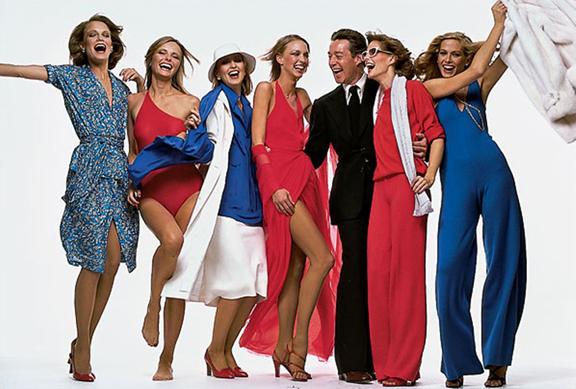
A consumer looks not for utility and ergonomics in a design for a kitchen tool, or warmth and quality of fabric in a garment but for sheer aesthetics. Aesthetics which change in the modern era as quickly as the wind; blowing sense and frugality out of a buyer’s mind and occupying a person with only the fantasy of what that object will make their life seem like and which neighbors will admire enough to go out and emulate themselves. Fashion at some point long before the time frame this exhibit is set in took a turn for the absurd, expensive and mercurial and has never quite come back to being practical for more than a hiccup in collective culture, as witnessed by the Great Depression/ WWII era and the recession during the 1970’s. Each period stands in contrast to their subsequent eras of the 50’s and 80’s respectively when fashion once more became “artistic” and consumed with the idea of the designer. Two of the Met’s photos which explore this idea are the 1972 photo of the more practical designs of Halston and his Halstonettes
Halston and the Halstonettes
versus a 1985 photo of Iman modeling Thierry Mugler in which she wears a silver lame dress with breasts exposed save for giant mirror pasties and earrings the size of saucers. While the Halstonettes could easily be well-dressed working women on the go Iman is set into a fantasy; a world in which clothing is as unusable and impossible as can be. One in which the consumer is not worried about the viability of prĂŞt-a-porter fashion versus the dream world of haute couture editorials and wants that fantasy for themselves.
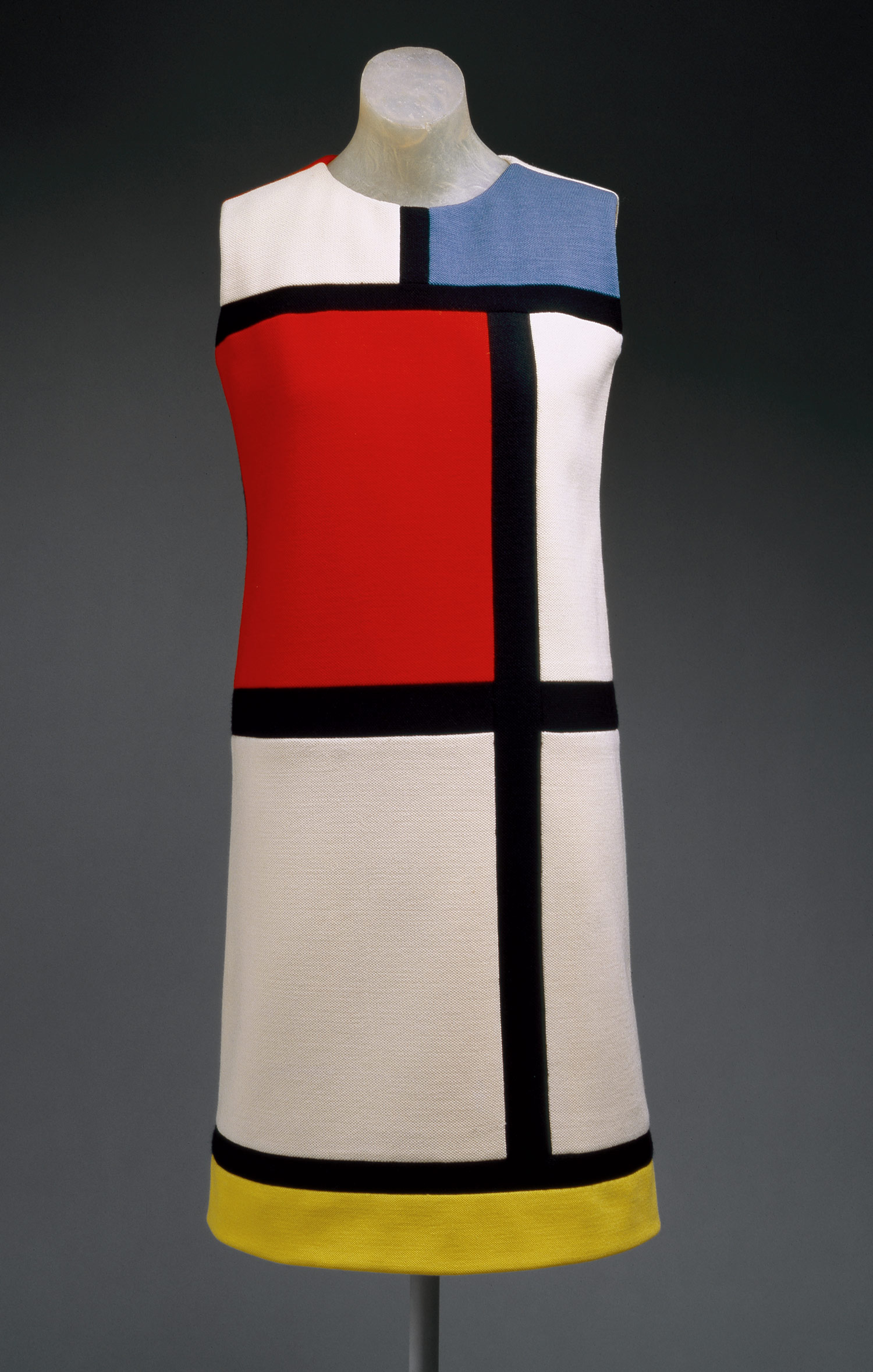
One understands the true meaning of fashion rather than clothing when perusing the haute couture offerings within the galleries of the show. It is wearable art for art’s sake and is often wild, outlandish and often nearly unwearable. It is “wearable” art for art’s sake. Among these pieces is a green dress with every inch sequined, adorned, and embroidered with stylized covers of Vogue magazine which seems a bit self-indulgent considering the heavy amount of influence Vogue America editor Anna Wintour had on the show. The garment’s heavy sequin construction and long floppy feel make the garment seem grave and would make the wearer feel as if she were dragging it around, least of all problems would be the eventuality that the sequins would quickly begin to fall off with any regular use. Similarly Yves Saint Laurent’s iconic “Mondrian day dress” from 1965 pierces the wall between reality and the new art Mondrian sought to create with De Stijl.
"Mondrian" day dress Yves Saint Laurent 1965
Mondrian wanted a new art for a new universal method of painting and one has to wonder what he would think of his method of painting which was formulated with the idea of uniting all the people of the world under modernism translated to an extremely expensive and festishized form of clothing production like haute couture.
Speaking of practicality of form and intent an interesting line is crossed somewhere within the timeline of this exhibit. Photos stop being just pretty pictures of personified hangers wearing the clothes to be sold and start to be considered for artistic merit. Similarly the photographers taking the pictures were able to build careers as their notoriety grew. Photographers like Richard Avedon, Irving Penn and Peter Lindbergh, who are all featured in the show became influential not only behind the lens but in determining who would wear the clothes being showcased, therefore determining who most well-known faces and names were in the fashion industry. Collectively these three men are associated with approximately eighty years in the fashion industry and in their overlapping careers effected, changed and molded perhaps dozens of “new” “modern” styles into ready-to-consume packages to be emulated by the public at large. Even as their own models or muses became attached and defined by one style and aged, falling out of favor, these photographers could mold and change the new look for the modern woman, enjoying careers that lasted several decades.
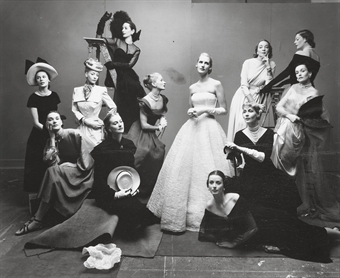
As for the relationship between the model and photographer, and designer exhibition co-curator Kohle Yohannen points to two quotes which perfectly crystallize the journey of the model from a breathing mannequin to a supermodel. In 1920 Paul Poiret, one of the leading French designers who specialized in the “new” “modern” uncorseted look for women said to a journalist who attempted to talk to a model during a showing “Do not talk to the girls, they are not here.” Seventy years later supermodel Linda Evangelista spoke for herself saying on the subject of a model’s salary in 1990 “We don’t get out of bed for less than $10,000 a day.” The idea of the model as a career or identity has its legs in the early 20th century. In the same year the exhibition uses as its starting point Irving Penn took a photo he called “The Twelve Most Photographed Models” showing the 12 women all in one room, posing, wearing different modes of dress, all playing the prima ballerina in their own production, seemingly oblivious to the eleven others.

“Twelve Most Photographed Models” Irving Penn 1947
While these women were by no means considered the “supermodels” of the late 80’s and early 90’s this photo charts an interesting change in not only the visibility of a model but also her personal presence. While this cannot be used as a real argument for the case of the fashion industry reflecting any sort of women’s liberation leanings one fact does become clear: from this point on the idea of the single model as a personality or brand and the inception of the spokesmodel is reliant on the idea of the model having a name and being recognized as one person and no one else, thereby asserting her own individuality if not from men then definitely from under the thumb of the designers and photographers, who up to this point controlled a model’s career. This becomes all the more clear in the 80’s when the aforementioned supermodels, Evangelista among them were at the center of an all-out bidding war among the major designers and were regularly offered large sums of money under the table to represent designers exclusively and refuse all other offers.
The Metropolitan Museum of Art’s show features more than just the trivial history of clothes worn by women in the last century. It gives the viewer an almost Marxist understanding of concepts, changes and politics within the fashion industry which is, as many often forget, a business first and foremost. Through the stories of designers, photographers and models detailed throughout the show this becomes ever apparent. From the reactionary Post-WWII fashion of the show’s beginning in 1947 through the rollercoaster of hemline economics to the “greed is good mentality” of supermodels working for the highest bidder in the 80’s the idea of fashion is rooted far more firmly in the frivolity of planned obsolescence than creativity or its true purpose for the human race: the responsibility of making durable, comfortable, equitable clothing for the masses.
History of Design
Final Paper
The Model as Muse at the Metropolitan Museum of Art
As seen through the eyes of Thorstein Veblen
In a time when wastefulness is at an all time high, a time when men, women and even children live on the ever-moving conveyor belt of of consumption the Metropolitan Museum of Art has decided to exhibit a show celebrating the worship of retail culture. While “the Model as Muse,” as the exhibit is titled focuses on the rise to prominence of those wearing the garments one cannot help but to mention that their entire profession serves solely to promote the capitalistic gains of the design house.
The show begins in 1947, a crossroads for history and fashion in many respects. One, the Post-WWII yearnings of consumers, especially those living in America, made them hungry for a new ostentatious style after the trauma and rationing that accompanied the war. Two, Christian Dior debuted “the New Look,” an ultra-feminine mode of dress designed to exaggerate hips and bust while cinching in the waist but always emphasizing the lady as demure and refined.
Dior’s New Look circa 1951
Three, the Ford modeling Agency, now one of the foremost businesses of its kind, opened its doors.
Almost immediately one can see the idea of “hemline economics” at play in this chronological show. While some swear it is an actual market barometer rather than a coincidence or after effect, it has been noted that within the last century the length of skirt hemlines has often reflected not just the cultural climate of an era but also the severity of the economic forecast. This is reflected in flapper fashion of the 20’s to the more austere slim, straight silhouette of the 30’s. Similarly, the New Look amplifies the female form and brought the skirt up slightly, optimistically after WWII and was immediately followed by the mini skirt craze of the free-wheeling and design conscious 60’s, which is shown in the exhibition in works designed by Paco Rabanne, Yves Saint Laurent and others.
Donyale Luna in Paco Rabbane photo by Richard Avedon

Twiggy in Yves Saint Laurent dress 1967
The idea of fashion is rooted therefore not in the spirit of creativity, change of joie de vivre but truly in the lifestyle of happiness sought through planned obsolescence, the very vehicle through which countries have been padding their economies for decades. Hemlines, shoulder pads, ribbons, bows, and buttons all are ornamented constructed within an inch of usability and then deconstructed once more. The result amounts to little more than the use of motion lines which have trickled down from automobile design to produce the women’s first streamlined, aerodynamic toaster. This calls to mind the photo print of a design for a topless bathing suit designed by Rudi Gernriech which is included in the show. As modeled by Peggy Moffitt in 1964 the design caused a stir not just because of its originality but truly because of the futility of such a design; a piece of clothing which is not wearable or usable for the task for which it is designed. Thus my own point on the matter of beauty and value is once more upheld.
Peggy Moffitt in topless swimsuit by Rudi Gernreich 1964
A consumer looks not for utility and ergonomics in a design for a kitchen tool, or warmth and quality of fabric in a garment but for sheer aesthetics. Aesthetics which change in the modern era as quickly as the wind; blowing sense and frugality out of a buyer’s mind and occupying a person with only the fantasy of what that object will make their life seem like and which neighbors will admire enough to go out and emulate themselves. Fashion at some point long before the time frame this exhibit is set in took a turn for the absurd, expensive and mercurial and has never quite come back to being practical for more than a hiccup in collective culture, as witnessed by the Great Depression/ WWII era and the recession during the 1970’s. Each period stands in contrast to their subsequent eras of the 50’s and 80’s respectively when fashion once more became “artistic” and consumed with the idea of the designer. Two of the Met’s photos which explore this idea are the 1972 photo of the more practical designs of Halston and his Halstonettes
Halston and the Halstonettes
versus a 1985 photo of Iman modeling Thierry Mugler in which she wears a silver lame dress with breasts exposed save for giant mirror pasties and earrings the size of saucers. While the Halstonettes could easily be well-dressed working women on the go Iman is set into a fantasy; a world in which clothing is as unusable and impossible as can be. One in which the consumer is not worried about the viability of prĂŞt-a-porter fashion versus the dream world of haute couture editorials and wants that fantasy for themselves.
One understands the true meaning of fashion rather than clothing when perusing the haute couture offerings within the galleries of the show. It is wearable art for art’s sake and is often wild, outlandish and often nearly unwearable. It is “wearable” art for art’s sake. Among these pieces is a green dress with every inch sequined, adorned, and embroidered with stylized covers of Vogue magazine which seems a bit self-indulgent considering the heavy amount of influence Vogue America editor Anna Wintour had on the show. The garment’s heavy sequin construction and long floppy feel make the garment seem grave and would make the wearer feel as if she were dragging it around, least of all problems would be the eventuality that the sequins would quickly begin to fall off with any regular use. Similarly Yves Saint Laurent’s iconic “Mondrian day dress” from 1965 pierces the wall between reality and the new art Mondrian sought to create with De Stijl.
"Mondrian" day dress Yves Saint Laurent 1965
Mondrian wanted a new art for a new universal method of painting and one has to wonder what he would think of his method of painting which was formulated with the idea of uniting all the people of the world under modernism translated to an extremely expensive and festishized form of clothing production like haute couture.
Speaking of practicality of form and intent an interesting line is crossed somewhere within the timeline of this exhibit. Photos stop being just pretty pictures of personified hangers wearing the clothes to be sold and start to be considered for artistic merit. Similarly the photographers taking the pictures were able to build careers as their notoriety grew. Photographers like Richard Avedon, Irving Penn and Peter Lindbergh, who are all featured in the show became influential not only behind the lens but in determining who would wear the clothes being showcased, therefore determining who most well-known faces and names were in the fashion industry. Collectively these three men are associated with approximately eighty years in the fashion industry and in their overlapping careers effected, changed and molded perhaps dozens of “new” “modern” styles into ready-to-consume packages to be emulated by the public at large. Even as their own models or muses became attached and defined by one style and aged, falling out of favor, these photographers could mold and change the new look for the modern woman, enjoying careers that lasted several decades.
As for the relationship between the model and photographer, and designer exhibition co-curator Kohle Yohannen points to two quotes which perfectly crystallize the journey of the model from a breathing mannequin to a supermodel. In 1920 Paul Poiret, one of the leading French designers who specialized in the “new” “modern” uncorseted look for women said to a journalist who attempted to talk to a model during a showing “Do not talk to the girls, they are not here.” Seventy years later supermodel Linda Evangelista spoke for herself saying on the subject of a model’s salary in 1990 “We don’t get out of bed for less than $10,000 a day.” The idea of the model as a career or identity has its legs in the early 20th century. In the same year the exhibition uses as its starting point Irving Penn took a photo he called “The Twelve Most Photographed Models” showing the 12 women all in one room, posing, wearing different modes of dress, all playing the prima ballerina in their own production, seemingly oblivious to the eleven others.
“Twelve Most Photographed Models” Irving Penn 1947
While these women were by no means considered the “supermodels” of the late 80’s and early 90’s this photo charts an interesting change in not only the visibility of a model but also her personal presence. While this cannot be used as a real argument for the case of the fashion industry reflecting any sort of women’s liberation leanings one fact does become clear: from this point on the idea of the single model as a personality or brand and the inception of the spokesmodel is reliant on the idea of the model having a name and being recognized as one person and no one else, thereby asserting her own individuality if not from men then definitely from under the thumb of the designers and photographers, who up to this point controlled a model’s career. This becomes all the more clear in the 80’s when the aforementioned supermodels, Evangelista among them were at the center of an all-out bidding war among the major designers and were regularly offered large sums of money under the table to represent designers exclusively and refuse all other offers.
The Metropolitan Museum of Art’s show features more than just the trivial history of clothes worn by women in the last century. It gives the viewer an almost Marxist understanding of concepts, changes and politics within the fashion industry which is, as many often forget, a business first and foremost. Through the stories of designers, photographers and models detailed throughout the show this becomes ever apparent. From the reactionary Post-WWII fashion of the show’s beginning in 1947 through the rollercoaster of hemline economics to the “greed is good mentality” of supermodels working for the highest bidder in the 80’s the idea of fashion is rooted far more firmly in the frivolity of planned obsolescence than creativity or its true purpose for the human race: the responsibility of making durable, comfortable, equitable clothing for the masses.
Laurie Anderson
Laurie Anderson is an unusual character in the art world, especially for someone of her generation. She has cornered the market by cultivating a commodity so unique the art word cannot substitute it: herself. Anderson brings to each performance not only a brash enthusiasm but technological savvy and sociological curiosity. She is the old plus the new; a student of human behavior and how it is shaped by technology and also a creator of many new technological feats and devices. She is unquestionably a superstar of the modern art and new media world whose gender never seems to enter the picture as a problem and is instead only a facet of her work. Her singular take on art and pop culture over the years has gained her fame, distinction and a number two hit on the British pop charts. Beyond these novelties she also has a gift for understanding the temporalities and possibilities of performance art and exploits them not only to prove whatever thesis she is exploring but also to show viewers exactly how broad the definition of such an art form can be.
Laurie Phillips Anderson was born in 1947 in Glen Ellyn, Illinois. As a child she had a love for the violin, which she began playing at the age of five. Her parents encouraged her passion and she went on to play in the Chicago Youth Symphony. She graduated from Barnard College with high honors and a degree in Art History. In 1972 she received her Masters in Fine Arts in sculpture from Columbia University. She worked several arts related jobs, including as an instructor, a writer for Artforum and illustrating children’s books.
Some of her earliest experiments including sound were completed while she was still pursuing her degree, like a 1969 piece of music composed for car horns. Many of her early recordings survive today only through written records of her own and of people who experienced them as part of art installations during the early 70’s.
One excellent example of Anderson’s grasp of the fragile temporality is her performance piece Duets on Ice. For this composition Anderson played the violin, an instrument which has long been a fixture of her performances on the street while wearing ice skates each embedded into a block of ice. The performance only lasted as long as the ice did and when it melted she would pack up and leave, no matter how big a crowd she had drawn.
Anderson not only understands the nebulous definition of what is and is not performance art but also legitimizes it through the steps she takes in creating her pieces. Her use of the violin, considered not only a respected but highly classical instrument, in her avant garde work stretches what new media means at the same time that it gives her a frame of reference familiar to all viewers to work from. Of the violin Anderson has said “For me, the violin is the perfect alter ego, it’s the instrument closest to the human voice, the female human voice, it’s a siren.” Anderson crafts each piece using the violin into a siren song, evoking human emotion, humor and underscoring important themes within pieces both with the sound of her violin and the relationship between musician and instrument she toys with while playing.
She plays the violin in a capacity which is both classical and ground breaking. For more than 20 years she has worked with audio engineers and designers and has created and collaborated on several landmark inventions that use the violin as a base. A most basic example of this would include a violin that remotely accesses and plays back samples. Anderson extrapolated this idea of how sound is produced, recorded and played back in many different ways and came up with other transmutations of the same idea. The Neon Violin and Bow was used during her Home of the Brave concert series and not only glowed (allowing her to be partially seen and keep the violin at the center of attention even when lights were turned out) but the elements used to light the instrument effected the tone and quality of the violin, producing an ominous buzzing that added to the technophobia and military industrial overtones of the piece. It also had the funny habit of picking up CB radios in the area.
Her Self-Playing Violins play a recording from within them, allowing for the performer to ostensibly play a duet with oneself. She focused on a more ubiquitous format in creating the Viophonograph, which she produced by attaching mini records to her violin and using her bow as a needle. Perhaps her most revolutionary endeavor was her “Tape Bow,” a violin bow that used audio tape instead of horse hair and had a magnetic tape head attached at the top. While this limited the sound she was able to produce in a more confining way, as only one recording was able to be played from each tape bow, Anderson was basically working with an extremely primitive synthesizer (another instrument she uses heavily in her work) as she could use any sound that could be recorded. For this Anderson picked anything from a familiar melody to animal sounds for a sample. She would also record colloquial sayings in other languages, play and record them backwards and then search for meaning in those new recordings, some of which were eventually turned into tape bows. Each bow was labeled so she could pick a sample at will. To this end it seems as though Anderson has achieved one of her goals as she was at one point quoted as saying “I’ve spent a lot of time trying to teach the violin to talk. I love the violin because it’s a romantic, nineteenth-century instrument, and because you can hold it.”
There is a certain turning point reached in Anderson’s work that is exemplified by her choice of musical instruments. She has worked faithfully with the violin for most of her career but also relied heavily on the synthesizer during much of the 80’s. This marks a point of interest and a theme in Anderson’s work: the familiar, romantic, domestic vs., the foreign, cold and technological. The old vs. the new. The warm tone and human voice of the violin, as Anderson noted, is aligned with the old world, classical music and antiquity; a link to a shared past many mainstream Americans cannot tap into or feel connected to. By contrast synthesizers can have a cold, canned sort of sound and are entirely the product of technological innovated, rely inherently on the use of electricity, and some do not require any human touch whatsoever. Their newness, novelty and use in popular culture (most notably rap and pop music) make them immediately accessible to the public and are heard at this point universally on the radio. That being said, Anderson’s two most favorite instruments are directly at odds with one another in sound, method of play and personality. Perhaps this is why both work so well when combined within her work.
Her work at times becomes an all-out rock concert, and few have achieved the sort of rock star status Anderson carries off easily in performances like 1984’s Home of the Brave, a full scale concert which lasted eight hours over the course of two nights. Anderson was backed by a band and played the piano, synthesizer and violin. She had an effortless confidence and grace while exuding an obvious sense that she was at ease with the heavy load of performance material, both the musically and artistically. The use of musical and storytelling elements of Home of the Brave was not unlike those of the Talking Head’s concert film from the same year, Stop Making Sense. Both feature art of a performance and visual nature melded into concert form and Anderson has often been called a female version of Talking Heads front man David Byrne.
Indeed the penchant for suits and high-brow theatrics seem to be a trait shared by both Anderson and Byrne but for Anderson it proves another point. Her use of androgynous suits, her short haircut and tennis shoes worn on stage defies the classical female stereotype even as she seems to reinforce it; she also wears a slinky evening gown and opera length gloves on stage during Home of the Brave but pairs it with those same tennis shoes.
Speaking of rock star status, Anderson has also had the strange distinction of actually being one as she scored a number 2 hit other British pop charts for her song “O Superman,” a song and accompanying video based on the opera Le Cid. She changed the lyrics and themes of the song to reflect the U.S. military industrial complex and the distance that exists between human beings- an alienation that is aided by ever evolving technology. She modifies the opening lyrics singing “O Superman, O juge, o mom and dad,” playing with the original text but also emphasizing the idea of the nuclear family (as a united and as a separated loose network) within the age of nuclear weaponry. As the song comes to a close she intones quietly, half speaking “'Cause when love is gone, there's always justice. And when justice is gone, there's always force. And when force is gone, there's always Mom. Hi, Mom!” This references several different ideas, including the U.S. military as enforcer of “good” in the world, ideals of that American identity (such as truth, love and freedom), and forced or farcical tropes such as the out of place “Hi, Mom!” Anderson further toys with the idea of familial attachment and Cold War sentimentality with the lines “So hold me, Mom, in your long arms. In your automatic arms. Your electronic arms. In your arms. So hold me, Mom, in your long arms. Your petrochemical arms. Your military arms. In your electronic arms.” As these lines fade at the end of the piece her synthesizer swells, the sound of strings is heard and birds chirp in the background anachronistically. The viewer is left stunned, in shock at the gravity of the themes expressed and unfulfilled as Anderson offers no solutions to the problems highlighted.
O, Superman
She has therefore done what many others, including Joseph Beuys have attempted to do unsuccessfully; she has crossed over from the avant garde to the mainstream and in doing so united both high and low art (pop music).
Though Anderson is not seen as being extremely feministic in her work this does not protect her from the slings and arrows of some of her more gender-political colleagues. Her work, many would say, is of a confessional or personal nature, something for which female artists have been dogged and male artists have been lauded. Yet her ideas extend beyond this to tell of the trappings, pitfalls and phobias of symptomatic of the masses living within post-modern America. Her use of sociology rather than sentimentality upsets this stereotype and the idea of overtly or inherently art and or an inherently female artistic point of view. Her interest in technology and science is also traditionally a hobby or task fostered for young boys and men and discouraged for girls and women. She also often amplifies her voice, obviously making it louder and using strange effects, therefore making it larger than life, scary, or one could interpret, more masculine. Coupled with the aforementioned suits Anderson engenders herself by creating a new gender on stage which is in one instant male, female and other; a storyteller and objective observer.
The idea of Anderson as a storyteller has footing in both her live performances and her early sculptural work. While she was a student at Columbia studying sculpture Anderson began incorporating Buddhist hand gestures called “mudras” into her pieces. These gestures could have small meanings, like specific words, “writing,” for instance or larger meanings, like higher planes of consciousness. She made the sculptures out of pulp from old newspapers. The pieces therefore have more than even a double meaning being highly conceptual as they are actually words (the mudras) made from other words (the printed information on Anderson’s daily copy of the New York Times).
One cannot help but notice the importance of hand gestures when coupled with the storytelling element of “Langue D’Amour” from Home of the Brave. It is also easy to see her background in story telling from writing children’s books in this performance. The piece’s title means “language of love” in French and is a fantastical story told by Anderson with a hand held microphone while she’s wearing the aforementioned evening gown and tennis shoes. She narrates the story wild-eyed using hand gestures that are at times quite literal but often nonsensical. Anderson slinks around the stage, switching the microphone between her two hands in a complicated set of maneuvers that look more born out of a dance than a necessity to hold a microphone.
Langue D'Amour
Anderson explores humanity and life in the digital age of the United States by creating new vernaculars she continues to evolve to this day. She invokes images verbally as well as visually, projecting images such as houses, pillows to suggest sleep and telephones to signify communication and the breakdown of human contact. Her passion for this subject as well as zeal for technological play has solidified her place as one of the most prolific and groundbreaking artists in any field.
Related, adorable and feministically at odds with this entire piece:
WORKS CITED
Anderson, Laurie. "From United States." Out From Under. Ed. Lenora Champagne. New York: Theatre Communication Group Inc, 1990. 45-53.
Anderson, Laurie. "Laurie Anderson Bio." Laurie Anderson Official Website. 15 Feb. 2009
Anderson, Laurie. United States. New York: Harper & Row, 1984.
Goldberg, Roselee, and Laurie Anderson. Laurie Anderson. New York: Harry N. Abrams, 2000.
The Plunge
An extremely personal performance piece performed once and ruined by a tech person's glitch using iTunes. Had the speaker's intended recipient had any sense they would've run upon hearing this for the first time. Audio coming soon.
There’s something that you need to understand about me. There’s something that you need to understand about me that you don’t know. That you can’t possibly know. Every time you tell me something I don’t like hearing and I don’t get upset with you is a very new, good thing. If this had been me two years ago I would have mood swings and undulate hot and cold the minute you said something that irked me. That I tell you when I tell you that I’m upset is amazing. Even if I shrug you off and you have to ask- even better that you ask- that’s what you need to do! I would’ve hated to be that way for you but I didn’t know any better. Had to grow out of it. Had to take 2 and a half years to learn to be myself. Be fine unprompted. Be happy simple. Because I was with the same person from 15 to 18 I was basically the same from beginning to end. Let me explain that: I was the same emotionally and physically at each check point where I should have been developing. Birthdays, deaths of family members, report cards, AP’s, SATs, PSATs, PSSAs, whatever.
And by the same I mean that I would hear some offending words come into my brain, feel my gaze becoming steely, unfocused physically, laser accuracy mentally as a slow chill rolled down my back and across my shoulders, down the arms to my hands. Whole body ice bath; cold; changed. Like that, within a matter of 30 seconds. And I’d feel it coming, I would think I’d try to fight it but I think I was fascinated by the resolve of that wave, that ebb like an undertow could suck you straight down when you thought you had control. But you didn’t.
I said no milestones changed me, not even the deaths of family members but one did. One created such a release it reminds me now of how I felt during the build up. Plugged up. After my grandmother died we were all in a low cool stasis for a while. Poppy got laid off and didn’t work for almost a year. Cooked a lot, watched Court TV. But slowly that disconnect and discomfort I felt for so long thawed and I remembered how close we used to be. At my grandmother’s funeral I bounded around the room and laughed so hard with everyone. Afterwards I felt terrible about it but it was because it was the first time the family had all been together in seven years and no one was worried Nanny was suffering anymore.
Maybe that time has passed. I like to think every time that I just open my mouth, take a breath and smile at you with clear eyes when you spring something on me rather than yelling and feeling betrayed is a small victory. For me, for us, for the sake of sanity in the world. The ability for me to apply to you at all what I’m feeling, to mew it out sweetly, honestly, rather than contorted with malice and mistrust; to sit and listen to you at all rather than turn over and swat you away; the revelation to at all let rationality and empathy enter my head and bear my chest bare to a possible onslaught with faith alone in you is, well, my gift to you, to put it selfishly. That’s not to say that you should be humbled or amazed by this admission but merely that you need to understand where I’ve been and where I’ve allowed you to take me in a very short time.
I brought myself part way out, dipped my toe in but you clutched my hand and jumped into the water with me. And it’s not cold; my feet don’t hit the steely bottom. I float unfocused but lucid to the top, pick my head up to breathe and feel the cool I quickly adjust to roll down my back and across my shoulders down my arms to my hands. Cool, changed. Like that, within a matter of 30 seconds, the incredible trust you’ve earned since you were honest with me.
So that’s the way it is. I just wanted to tell you that I can’t help but look you in the eye and accept how you feel even if you can’t stare me down when you say it.
There’s something that you need to understand about me. There’s something that you need to understand about me that you don’t know. That you can’t possibly know. Every time you tell me something I don’t like hearing and I don’t get upset with you is a very new, good thing. If this had been me two years ago I would have mood swings and undulate hot and cold the minute you said something that irked me. That I tell you when I tell you that I’m upset is amazing. Even if I shrug you off and you have to ask- even better that you ask- that’s what you need to do! I would’ve hated to be that way for you but I didn’t know any better. Had to grow out of it. Had to take 2 and a half years to learn to be myself. Be fine unprompted. Be happy simple. Because I was with the same person from 15 to 18 I was basically the same from beginning to end. Let me explain that: I was the same emotionally and physically at each check point where I should have been developing. Birthdays, deaths of family members, report cards, AP’s, SATs, PSATs, PSSAs, whatever.
And by the same I mean that I would hear some offending words come into my brain, feel my gaze becoming steely, unfocused physically, laser accuracy mentally as a slow chill rolled down my back and across my shoulders, down the arms to my hands. Whole body ice bath; cold; changed. Like that, within a matter of 30 seconds. And I’d feel it coming, I would think I’d try to fight it but I think I was fascinated by the resolve of that wave, that ebb like an undertow could suck you straight down when you thought you had control. But you didn’t.
I said no milestones changed me, not even the deaths of family members but one did. One created such a release it reminds me now of how I felt during the build up. Plugged up. After my grandmother died we were all in a low cool stasis for a while. Poppy got laid off and didn’t work for almost a year. Cooked a lot, watched Court TV. But slowly that disconnect and discomfort I felt for so long thawed and I remembered how close we used to be. At my grandmother’s funeral I bounded around the room and laughed so hard with everyone. Afterwards I felt terrible about it but it was because it was the first time the family had all been together in seven years and no one was worried Nanny was suffering anymore.
Maybe that time has passed. I like to think every time that I just open my mouth, take a breath and smile at you with clear eyes when you spring something on me rather than yelling and feeling betrayed is a small victory. For me, for us, for the sake of sanity in the world. The ability for me to apply to you at all what I’m feeling, to mew it out sweetly, honestly, rather than contorted with malice and mistrust; to sit and listen to you at all rather than turn over and swat you away; the revelation to at all let rationality and empathy enter my head and bear my chest bare to a possible onslaught with faith alone in you is, well, my gift to you, to put it selfishly. That’s not to say that you should be humbled or amazed by this admission but merely that you need to understand where I’ve been and where I’ve allowed you to take me in a very short time.
I brought myself part way out, dipped my toe in but you clutched my hand and jumped into the water with me. And it’s not cold; my feet don’t hit the steely bottom. I float unfocused but lucid to the top, pick my head up to breathe and feel the cool I quickly adjust to roll down my back and across my shoulders down my arms to my hands. Cool, changed. Like that, within a matter of 30 seconds, the incredible trust you’ve earned since you were honest with me.
So that’s the way it is. I just wanted to tell you that I can’t help but look you in the eye and accept how you feel even if you can’t stare me down when you say it.
Some posts to get the ball rolling
I'll be hijacking some posts I previously wrote for a blog I almost started with a friend to fill some space until content is up.At the least it'll give you a little slice of my brain to digest. And away we go!
"I always put too much batter in the cupcake pan"
Today I’d like to talk about something that makes me overwhelmingly happy. A small piece of joy that sugar coats the malaise that is the average day and eviscerates the bitterness of life with its indomitable sweetness. That thing, my friends, is the modern American cupcake. I can’t tell you my first real memory of these petit gateaux de joie (ok, that’s French for “little cakes of joy” but forgive me, I get a little fancy when I’ m excited) but I can tell you four things that are certain:
1. The excitement caused by being given or seeing a cupcake comes from several factors. Firstly, memories of how friggin’ exciting it was when you were given them on every classmate’s birthday in elementary school. At least that was the tradition at my elementary school. Secondly, the now internalized knowledge of how sugary and perfect this treat is and how it will send you orbiting in the sugar-powered hyper stratosphere upon first bite. Thirdly, that their small size and connection to children’s parties allows for an ease of decoration and whimsy that means they can be any color, shape, theme or flavor!
2. Ice Cream Cone Cupcakes are by far the most frivolous form of the dessert and thus are the best. When my classmates parents brought those in for us in school they because the de factor best class parents. Until the next parent did.
3. There is not one single thing on the face of the planet more disappointing than a bad cupcake. I’m looking at you, dry, overly-sugary store bought cupcake!
4. Cupcakes are the egalitarian dessert. No one will look at you funny or call you lazy if you make cupcakes from a mix. Come on, we’re not talking about a soufflĂ© here. The flavor possibilities are endless; from 3 Citrus Margarita to Oreo Cheesecake, anything is possible! Lastly, there are so many frosting and cake recipes and traditions that people all dietary choices and needs are covered! From the lacto-ovo vegetarian to the lactose intolerant; the bacon obsessed to the halal! All are welcome to join in the sugar-fueled frenzy.
As previously mentioned, cupcakes are a cyber pick-me-up when I’m done with class for the day and remember that there’s never anything good on TV besides Golden Girls. That’s when I go hunting for the very best of blogs and sites to inspire, entertain, and instruct me upon the wonder of mankind that is dessert. Here are a few of my favorites:
Cake wrecks
Not technically about cupcakes alone but the first time I showed my sister this site we both ended up crying out of laughter on the floor
Cupcakes take the Cake
A collection point for endless cupcake inspiration, reviews and listings of bakeries around the country all topped off with adorable fan-submitted photos of the epic fight between a baby and their first birthday cupcake
52 Cupcakes
The noble quest of a woman on a mission: create, recreate and decorate some of the world's most delicious looking cupcakes with her faithful pooch at her side
With that, I exit. Hopefully this post leaves you a little more happy if you've clicked on any of the links, a little more grateful for the existence of this petit confection and probably a little hungry.
Originally posted Tuesday, December 29, 2009
"I always put too much batter in the cupcake pan"
Today I’d like to talk about something that makes me overwhelmingly happy. A small piece of joy that sugar coats the malaise that is the average day and eviscerates the bitterness of life with its indomitable sweetness. That thing, my friends, is the modern American cupcake. I can’t tell you my first real memory of these petit gateaux de joie (ok, that’s French for “little cakes of joy” but forgive me, I get a little fancy when I’ m excited) but I can tell you four things that are certain:
1. The excitement caused by being given or seeing a cupcake comes from several factors. Firstly, memories of how friggin’ exciting it was when you were given them on every classmate’s birthday in elementary school. At least that was the tradition at my elementary school. Secondly, the now internalized knowledge of how sugary and perfect this treat is and how it will send you orbiting in the sugar-powered hyper stratosphere upon first bite. Thirdly, that their small size and connection to children’s parties allows for an ease of decoration and whimsy that means they can be any color, shape, theme or flavor!
2. Ice Cream Cone Cupcakes are by far the most frivolous form of the dessert and thus are the best. When my classmates parents brought those in for us in school they because the de factor best class parents. Until the next parent did.
3. There is not one single thing on the face of the planet more disappointing than a bad cupcake. I’m looking at you, dry, overly-sugary store bought cupcake!
4. Cupcakes are the egalitarian dessert. No one will look at you funny or call you lazy if you make cupcakes from a mix. Come on, we’re not talking about a soufflĂ© here. The flavor possibilities are endless; from 3 Citrus Margarita to Oreo Cheesecake, anything is possible! Lastly, there are so many frosting and cake recipes and traditions that people all dietary choices and needs are covered! From the lacto-ovo vegetarian to the lactose intolerant; the bacon obsessed to the halal! All are welcome to join in the sugar-fueled frenzy.
As previously mentioned, cupcakes are a cyber pick-me-up when I’m done with class for the day and remember that there’s never anything good on TV besides Golden Girls. That’s when I go hunting for the very best of blogs and sites to inspire, entertain, and instruct me upon the wonder of mankind that is dessert. Here are a few of my favorites:
Cake wrecks
Not technically about cupcakes alone but the first time I showed my sister this site we both ended up crying out of laughter on the floor
Cupcakes take the Cake
A collection point for endless cupcake inspiration, reviews and listings of bakeries around the country all topped off with adorable fan-submitted photos of the epic fight between a baby and their first birthday cupcake
52 Cupcakes
The noble quest of a woman on a mission: create, recreate and decorate some of the world's most delicious looking cupcakes with her faithful pooch at her side
With that, I exit. Hopefully this post leaves you a little more happy if you've clicked on any of the links, a little more grateful for the existence of this petit confection and probably a little hungry.
Originally posted Tuesday, December 29, 2009
Subscribe to:
Comments (Atom)